
Cayton Point
★★★★★SmallBest of the week: Thursday around 17:00, 3–5 ft and offshore.
Seven days
best session each day · swipe| Tue 6 | Wed 7 | Thu 8 | Fri 9 | Sat 10 | Sun 11 | Mon 12 | |||||||||||||||||||||||||
|---|---|---|---|---|---|---|---|---|---|---|---|---|---|---|---|---|---|---|---|---|---|---|---|---|---|---|---|---|---|---|---|
| Time | 21 | 06 | 09 | 12 | 15 | 18 | 06 | 09 | 12 | 15 | 18 | 06 | 09 | 12 | 15 | 18 | 06 | 09 | 12 | 15 | 18 | 06 | 09 | 12 | 15 | 18 | 06 | 09 | 12 | 15 | 18 |
| Surf ft | 1–2 | 1–2 | 1–2 | 2–3 | 1–2 | 1–2 | 3–4 | 3–5 | 3–5 | 3–5 | 3–4 | 2–3 | 2–3 | 1–2 | 2–3 | 1–2 | 1–2 | 1–2 | 1–2 | 1–2 | 1–2 | 1–2 | 1–2 | 1–3 | 1–2 | 2–3 | 1–2 | 1–2 | 1–2 | 1–2 | 1–2 |
| Swell | 2s | 4s | 4s | 4s | 4s | 4s | 5s | 7s | 7s | 7s | 7s | 8s | 8s | 3s | 3s | 7s | 3s | 3s | 3s | 3s | 3s | 6s | 6s | 6s | 6s | 5s | 5s | 6s | 7s | 6s | 5s |
| Wind mph | 7 | 14 | 16 | 14 | 15 | 11 | 18 | 17 | 13 | 7 | 7 | 17 | 17 | 16 | 16 | 15 | 14 | 17 | 19 | 19 | 18 | 13 | 12 | 9 | 9 | 6 | 12 | 15 | 13 | 13 | 11 |
| Tide m | 2.5↑ | 2.9↓ | 1.6↑ | 3.5↑ | 5.2↓ | 3.7↓ | 3.7↓ | 1.3↓ | 2.6↑ | 5.3↑ | 4.4↓ | 4.6↓ | 1.5↓ | 1.8↑ | 5.1↑ | 5.0↓ | 5.3↓ | 2.0↓ | 1.2↑ | 4.6↑ | 5.4↓ | 5.8↓ | 2.7↓ | 1.0↑ | 3.9↑ | 5.7↓ | 6.0↓ | 3.4↓ | 1.0↓ | 3.3↑ | 5.7↑ |
| Rating | ★★★★★ | ★★★★★ | ★★★★★ | ★★★★★ | ★★★★★ | ★★★★★ | ★★★★★ | ★★★★★ | ★★★★★ | ★★★★★ | ★★★★★ | ★★★★★ | ★★★★★ | ★★★★★ | ★★★★★ | ★★★★★ | ★★★★★ | ★★★★★ | ★★★★★ | ★★★★★ | ★★★★★ | ★★★★★ | ★★★★★ | ★★★★★ | ★★★★★ | ★★★★★ | ★★★★★ | ★★★★★ | ★★★★★ | ★★★★★ | ★★★★★ |
Surf is the face height at the beach after the swell is filtered for the way Cayton Point faces. Arrows point to where the swell and wind come from: an arrow pointing up means from the north. Tide is the height at Scarborough above chart datum, rising ↑ or falling ↓; the rating drops when the tide is outside the window this break works on. Amber marks the sessions worth setting an alarm for. From Saturday the swell comes from Météo-France's 10-day model, which is coarser than the 5 km German model used close in. Hours no model reaches are left blank, not shown as flat.
Exposure
Cayton Point faces north-east. Measured from the seabed, it is open to swell from N round to SE; the brighter a wedge, the deeper the water in that direction and the more of the swell gets in. Anything from behind the headlands scores nothing, however big the buoy says it is.
- N
- 0.3 m at 7 s (swell) · 100 % reaches the beach
- N
- 0.4 m at 2 s (wind sea) · 100 % reaches the beach
How Cayton Point works
- Swell
- Best from the north east.
- Wind
- Offshore is from the west; anything with north-east in it is onshore and messes it up.
- Tide
- high tide.
- Getting there
- The wave is at the north end of cayton point. Park at knipe point, and walk down through the woods to the wave. It's then a 3-400 meter paddle to the point.
A gnarly boulder point break only for the experienced surfer. Breaks left onto a shallow boulder reef with a small take off point. Often offers long barrels and fast sections, which can often catch out regular footed riders. Works best in large northly storm surf as cayton headland provides shelter from Northely winds. This is a dangerous wave and should be approcahed by season surfers with care. Beware : Rocks, crowds, more rocks, long walks, hypothermia! you have been warned.
Tide times
- Wed 02:09High5.1 m
- Wed 08:48Low1.6 m
- Wed 14:59High5.2 m
- Wed 21:09Low2.1 m
- Thu 03:03High5.4 m
- Thu 09:39Low1.2 m
- Thu 15:43High5.5 m
- Thu 21:55Low1.8 m
Scarborough station, 4 km away. Heights above chart datum, UK time.
Photos
All 8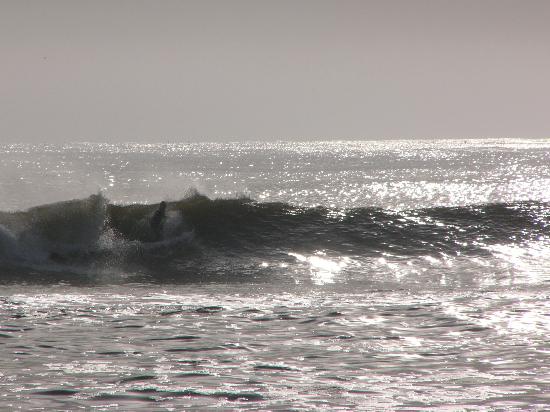


Members' own photos of Cayton Point. Credits: Sie Baker, Lanza, Oly - 899prod.
Comments
Nothing said about Cayton Point yet. Surfed it? Say what it's like.
Nearby
-
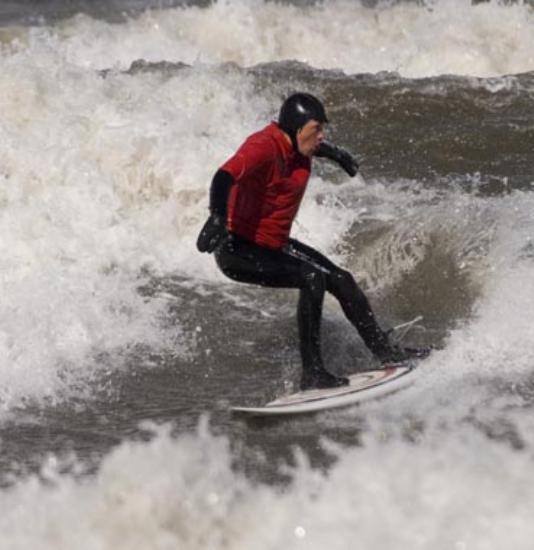 Pump houseScarborough · faces NE
 -
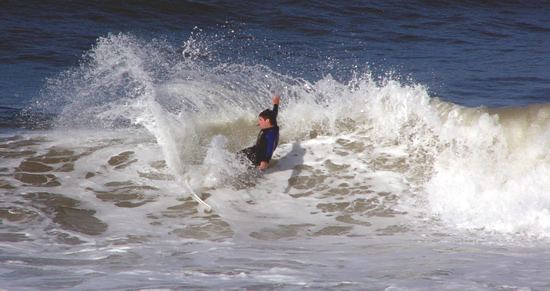 BunkersScarborough · faces NE
 -
 South BayScarborough · faces E
 -
 North BayScarborough · faces NE
 -
 Super SucksScarborough · faces NE
 -
 FileyFiley · faces E