
Blyth
★★★★★FlatBest of the week: Friday around 09:00, 4–6 ft and offshore.
Seven days
best session each day · swipe| Sun 4 | Mon 5 | Tue 6 | Wed 7 | Thu 8 | Fri 9 | Sat 10 | |||||||||||||||||||||||||
|---|---|---|---|---|---|---|---|---|---|---|---|---|---|---|---|---|---|---|---|---|---|---|---|---|---|---|---|---|---|---|---|
| Time | 23 | 06 | 09 | 12 | 15 | 18 | 06 | 09 | 12 | 15 | 18 | 06 | 09 | 12 | 15 | 18 | 06 | 09 | 12 | 15 | 18 | 06 | 09 | 12 | 15 | 18 | 06 | 09 | 12 | 15 | 18 |
| Surf ft | 0 | 0 | 0–1 | 0–1 | 0–1 | 0 | 1–2 | 1–2 | 1–2 | 0–1 | 0–1 | 0–1 | 0–1 | 1–2 | 1–2 | 1–2 | 2–3 | 2–4 | 3–5 | 4–6 | 4–6 | 4–6 | 4–6 | 4–6 | 3–5 | 3–5 | 2–3 | 2–3 | 2–3 | 2–3 | 1–2 |
| Swell | 2s | 4s | 5s | 3s | 3s | 3s | 7s | 2s | 6s | 6s | 6s | 2s | 5s | 6s | 6s | 6s | 3s | 4s | 5s | 5s | 6s | 7s | 7s | 7s | 7s | 7s | 7s | 7s | 7s | 3s | 3s |
| Wind mph | 14 | 13 | 14 | 17 | 20 | 16 | 4 | 3 | 1 | 2 | 3 | 5 | 6 | 9 | 10 | 9 | 12 | 12 | 14 | 11 | 6 | 12 | 7 | 9 | 14 | 16 | 14 | 15 | 17 | 16 | 14 |
| Tide m | 4.0↓ | 1.7↑ | 3.2↑ | 4.0↓ | 3.0↓ | 2.1↓ | 1.5↓ | 2.3↑ | 4.1↑ | 3.7↓ | 2.1↓ | 1.7↓ | 1.4↑ | 3.7↑ | 4.3↓ | 2.4↓ | 2.2↓ | 0.8↑ | 3.0↑ | 4.8↓ | 3.0↓ | 3.0↓ | 0.6↓ | 2.2↑ | 4.9↑ | 3.6↓ | 3.7↓ | 0.8↓ | 1.5↑ | 4.7↑ | 4.2↓ |
| Rating | ★★★★★ | ★★★★★ | ★★★★★ | ★★★★★ | ★★★★★ | ★★★★★ | ★★★★★ | ★★★★★ | ★★★★★ | ★★★★★ | ★★★★★ | ★★★★★ | ★★★★★ | ★★★★★ | ★★★★★ | ★★★★★ | ★★★★★ | ★★★★★ | ★★★★★ | ★★★★★ | ★★★★★ | ★★★★★ | ★★★★★ | ★★★★★ | ★★★★★ | ★★★★★ | ★★★★★ | ★★★★★ | ★★★★★ | ★★★★★ | ★★★★★ |
Surf is the face height at the beach after the swell is filtered for the way Blyth faces. Arrows point to where the swell and wind come from: an arrow pointing up means from the north. Tide is the height at Blyth above chart datum, rising ↑ or falling ↓; the rating drops when the tide is outside the window this break works on. Amber marks the sessions worth setting an alarm for. From Thursday the swell comes from Météo-France's 10-day model, which is coarser than the 5 km German model used close in. Hours no model reaches are left blank, not shown as flat.
Exposure
Blyth faces north-east. Measured from the seabed, it is open to swell from N round to E; the brighter a wedge, the deeper the water in that direction and the more of the swell gets in. Anything from behind the headlands scores nothing, however big the buoy says it is.
- SE
- 0.2 m at 5 s (swell) · 37 % reaches the beach
- S
- 0.2 m at 2 s (wind sea) · 1 % reaches the beach
How Blyth works
- Swell
- Best from the north-east.
- Wind
- Offshore is from the south-west; anything with north-east in it is onshore and messes it up.
- Tide
- all tides.
Long beach south of the pier; takes anything with east in it.
Tide times
- Sun 22:32High4.0 m
- Mon 05:11Low1.6 m
- Mon 11:32High4.1 m
- Mon 18:02Low2.1 m
- Tue 00:01High4.1 m
- Tue 06:46Low1.4 m
- Tue 12:55High4.2 m
- Tue 19:20Low1.8 m
Blyth station, 1 km away. Heights above chart datum, UK time.
Photos
In the gallery
michael marston, CC BY 2.0, via Wikimedia Commons.
Nearby
-
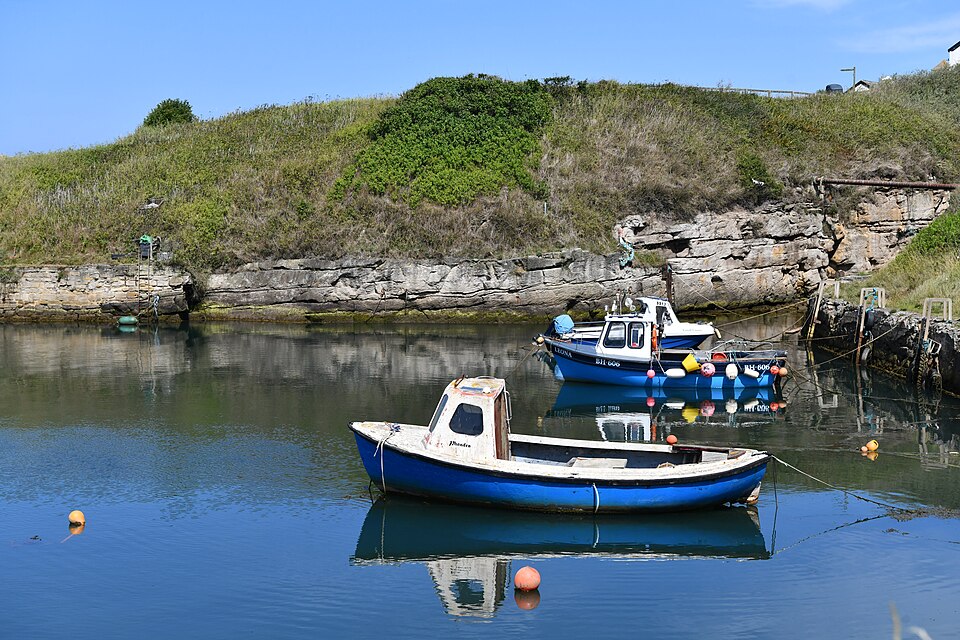 Seaton SluiceSeaton Sluice · faces E
 -
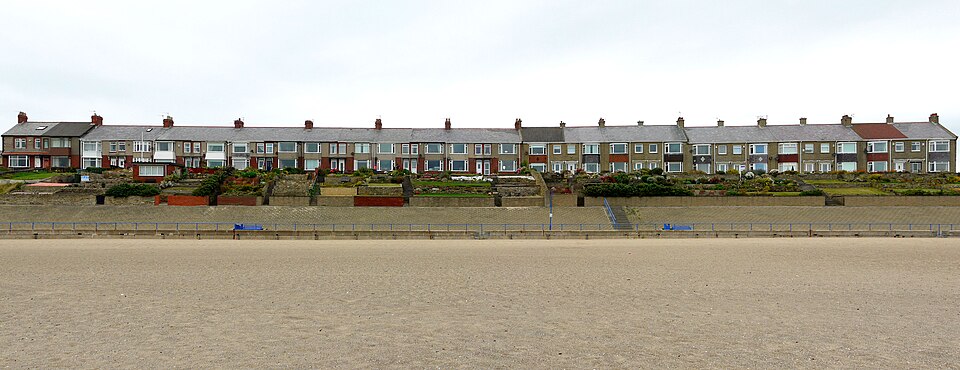 Newbiggin by the SeaNorthumberland · faces SE
 -
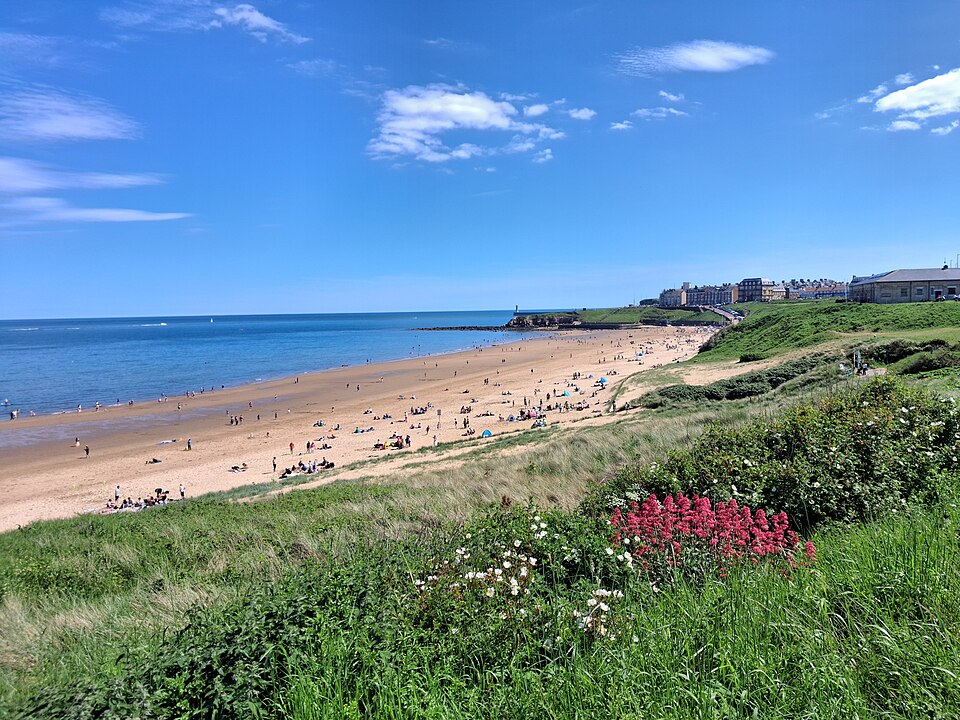 LongsandsTynemouth · faces E
 -
 Black MiddensTynemouth · faces NE
 -
 South ShieldsSouth Shields · faces E
 -
 Druridge BayCresswell · faces E