
Cullen
★★★★★SmallBest of the week: Friday around 12:00, 2–4 ft and cross-off.
Seven days
best session each day · swipe| Sun 8 | Mon 9 | Tue 10 | Wed 11 | Thu 12 | Fri 13 | Sat 14 | |||||||||||||||||||||||||
|---|---|---|---|---|---|---|---|---|---|---|---|---|---|---|---|---|---|---|---|---|---|---|---|---|---|---|---|---|---|---|---|
| Time | 18 | 06 | 09 | 12 | 15 | 18 | 06 | 09 | 12 | 15 | 18 | 06 | 09 | 12 | 15 | 18 | 06 | 09 | 12 | 15 | 18 | 06 | 09 | 12 | 15 | 18 | 06 | 09 | 12 | 15 | 18 |
| Surf ft | 1–2 | 0–1 | 0–1 | 0–1 | 0–1 | 0–1 | 0–1 | 1–2 | 1–2 | 1–2 | 1–2 | 2–3 | 1–2 | 2–3 | 2–3 | 3–4 | 3–5 | 3–5 | 4–5 | 4–6 | 4–6 | 4–5 | 3–5 | 2–4 | 2–3 | 2–3 | 1–2 | 0–1 | 0–1 | 0–1 | 0–1 |
| Swell | 7s | 6s | 5s | 5s | 5s | 6s | 6s | 6s | 6s | 6s | 7s | 3s | 3s | 3s | 3s | 4s | 4s | 4s | 4s | 4s | 4s | 6s | 6s | 5s | 5s | 5s | 3s | 3s | 3s | 3s | 3s |
| Wind mph | 1 | 5 | 5 | 3 | 2 | 2 | 6 | 7 | 8 | 7 | 8 | 8 | 10 | 11 | 11 | 12 | 14 | 14 | 15 | 13 | 14 | 9 | 8 | 9 | 7 | 7 | 10 | 10 | 10 | 10 | 10 |
| Tide m | 1.3↑ | 1.1↑ | 2.9↑ | 4.0↓ | 2.3↓ | 1.2↑ | 1.1↑ | 2.6↑ | 4.0↑ | 2.7↓ | 1.1↓ | 1.2↓ | 2.2↑ | 3.9↑ | 3.1↓ | 1.3↓ | 1.5↓ | 2.0↑ | 3.7↑ | 3.4↓ | 1.5↓ | 1.8↓ | 1.8↑ | 3.4↑ | 3.6↓ | 1.9↓ | – | – | – | – | – |
| Rating | ★★★★★ | ★★★★★ | ★★★★★ | ★★★★★ | ★★★★★ | ★★★★★ | ★★★★★ | ★★★★★ | ★★★★★ | ★★★★★ | ★★★★★ | ★★★★★ | ★★★★★ | ★★★★★ | ★★★★★ | ★★★★★ | ★★★★★ | ★★★★★ | ★★★★★ | ★★★★★ | ★★★★★ | ★★★★★ | ★★★★★ | ★★★★★ | ★★★★★ | ★★★★★ | ★★★★★ | ★★★★★ | ★★★★★ | ★★★★★ | ★★★★★ |
Surf is the face height at the beach after the swell is filtered for the way Cullen faces. Arrows point to where the swell and wind come from: an arrow pointing up means from the north. Tide is the height at Buckie above chart datum, rising ↑ or falling ↓; the rating drops when the tide is outside the window this break works on. Amber marks the sessions worth setting an alarm for. From Wednesday the swell comes from Météo-France's 10-day model, which is coarser than the 5 km German model used close in. Hours no model reaches are left blank, not shown as flat.
Exposure
Cullen faces north. Measured from the seabed, it is open to swell from NW round to E; the brighter a wedge, the deeper the water in that direction and the more of the swell gets in. Anything from behind the headlands scores nothing, however big the buoy says it is.
- NE
- 0.3 m at 7 s (swell) · 100 % reaches the beach
How Cullen works
- Swell
- Best from the north.
- Wind
- Offshore is from the south; anything with north in it is onshore and messes it up.
- Tide
- high tide.
good in wind - otherwise 5-6 foot waves
Tide times
- Sun 17:02Low1.2 m
- Sun 23:14High4.1 m
- Mon 05:20Low1.0 m
- Mon 11:35High4.0 m
- Mon 17:35Low1.1 m
- Mon 23:53High4.0 m
- Tue 05:51Low1.1 m
- Tue 12:09High4.0 m
Buckie station, 8 km away. Heights above chart datum, UK time.
Photos
In the gallery

Leslie Barrie, CC BY-SA 2.0, via Wikimedia Commons. Leslie Barrie, CC BY-SA 2.0, via Wikimedia Commons.
Nearby
-
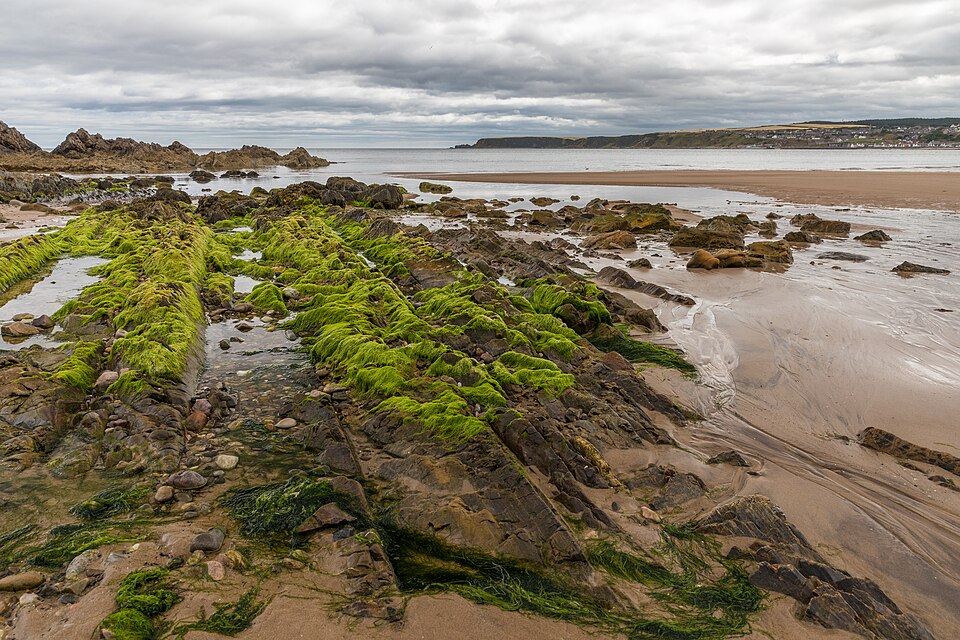 SandendSandend · faces N
-
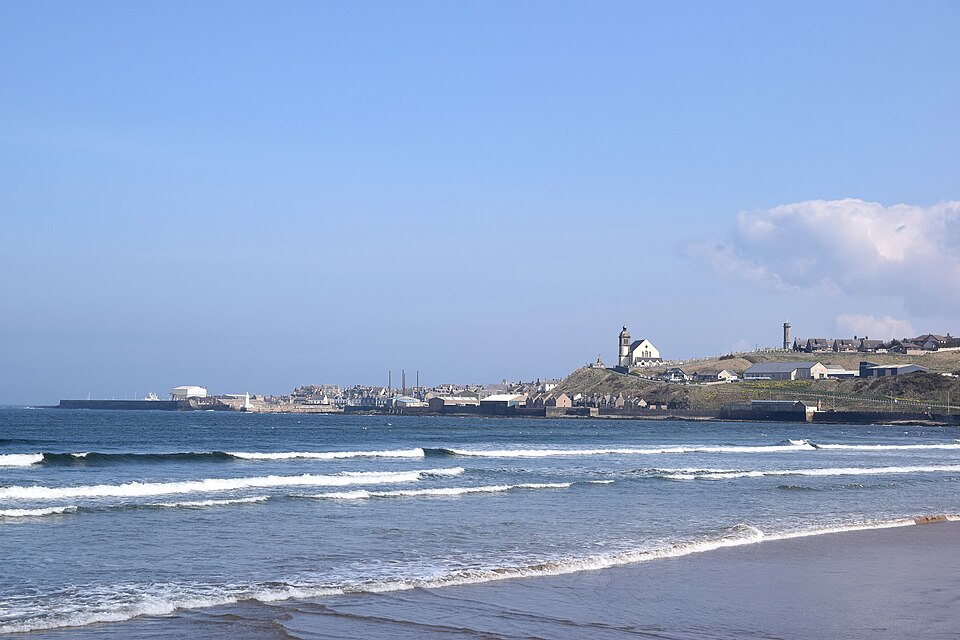 BanffBanff · faces N
-
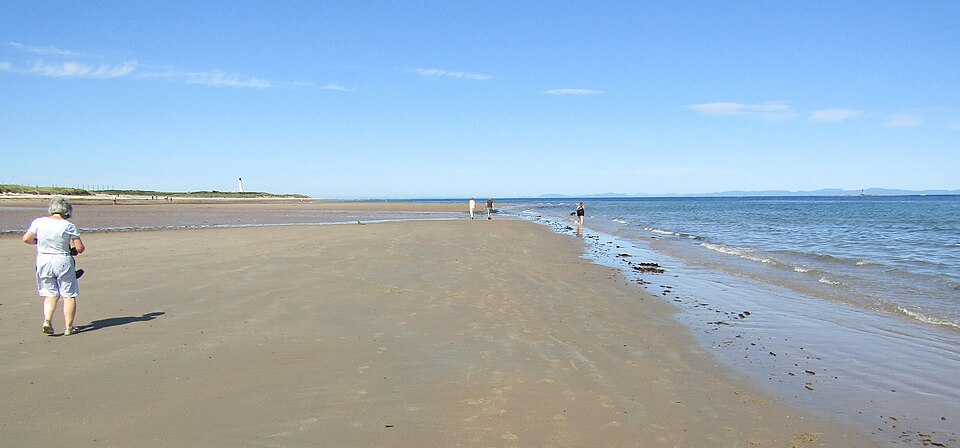 LossiemouthElgin · faces N